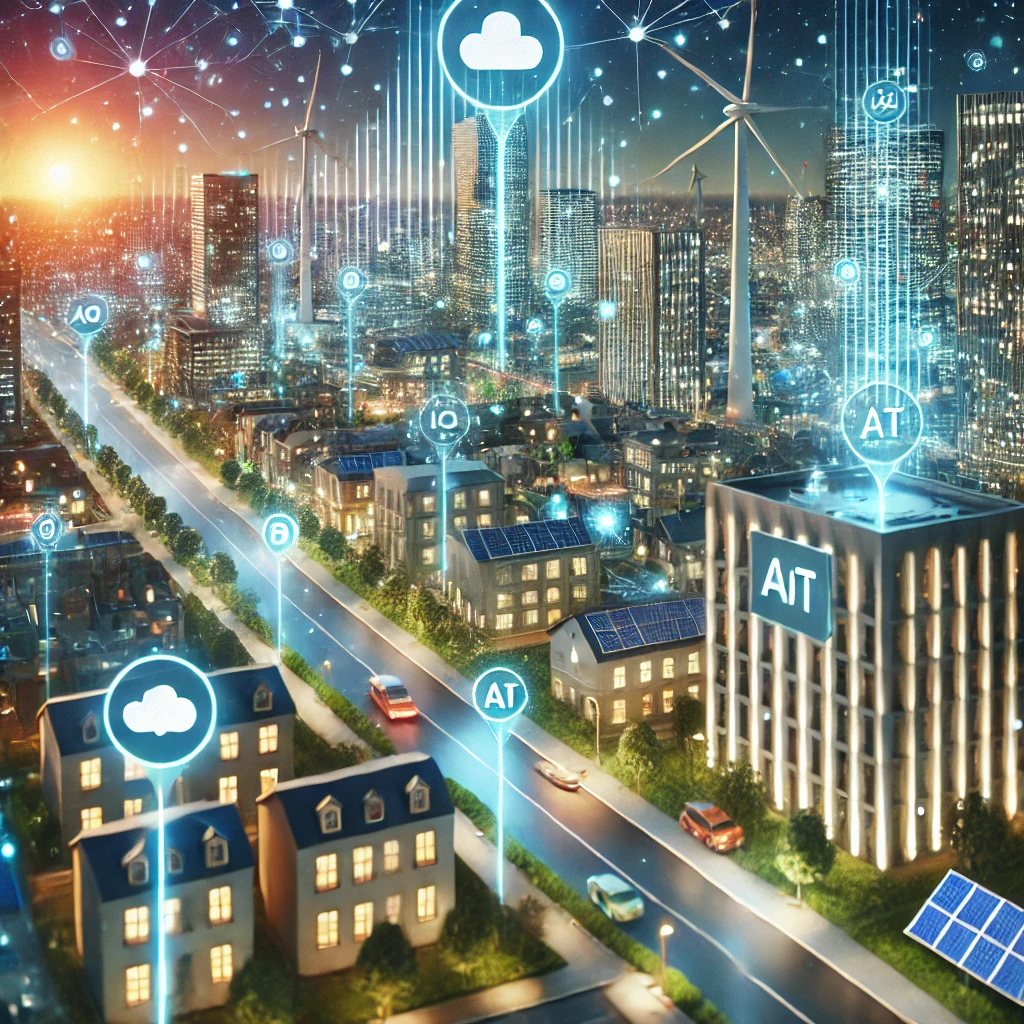
In today’s world, energy consumption is a growing concern, especially as industries expand and cities become more urbanized. Businesses are constantly searching for ways to reduce their energy usage while maintaining efficiency. Enter artificial intelligence (AI) — a technology that’s transforming the way we optimize energy consumption, making sustainability not just a goal but an achievable reality.
Energy optimization refers to the process of using data and technology to minimize energy consumption while maximizing operational efficiency. Traditional methods rely on manual monitoring, which can be time-consuming and prone to errors. AI, on the other hand, provides a more intelligent and automated approach, continuously analyzing energy usage patterns to identify inefficiencies and opportunities for improvement.
1. AI-Powered Data Analytics AI leverages big data to analyze patterns in energy usage. By monitoring systems in real-time, AI can identify anomalies, predict energy demand, and suggest optimizations. This helps businesses make data-driven decisions about their energy consumption.
2. Predictive Maintenance One of AI’s most powerful applications in energy optimization is predictive maintenance. By using machine learning algorithms, AI can forecast when equipment is likely to fail or require maintenance. This allows companies to address issues before they escalate, reducing downtime and energy waste.
3. Automated Energy Systems AI-powered automation systems, such as smart grids and intelligent HVAC (Heating, Ventilation, and Air Conditioning) systems, enable dynamic energy management. For example, an AI-enabled smart grid can automatically adjust energy distribution based on demand, reducing excess consumption and balancing loads more efficiently.
4. Optimization Algorithms AI can also deploy optimization algorithms that fine-tune energy usage at a granular level. By analyzing complex variables such as weather conditions, peak usage times, and energy prices, AI can optimize energy flow, reducing waste and lowering costs.
• Manufacturing Plants: AI systems in factories monitor machines to optimize energy consumption. For instance, by predicting when machines will be idle, AI can adjust energy inputs accordingly, ensuring no power is wasted.
• Smart Buildings: AI-driven energy management systems in smart buildings optimize heating, cooling, lighting, and ventilation. Sensors detect occupancy and environmental factors, allowing the system to adjust energy usage in real-time.
• Renewable Energy: In renewable energy systems, AI predicts the availability of energy from sources like wind or solar, optimizing storage and distribution. This helps balance energy supply with demand, maximizing the use of clean energy.
1. Cost Savings AI enables companies to reduce energy consumption, which translates into significant cost savings. By optimizing energy usage, businesses can lower their electricity bills while maintaining productivity.
2. Reduced Carbon Footprint With AI, companies can minimize energy waste, leading to a reduction in their carbon footprint. This contributes to environmental sustainability and aligns with global efforts to combat climate change.
3. Enhanced Operational Efficiency AI streamlines energy management processes, allowing businesses to operate more efficiently. From automated systems to predictive analytics, AI eliminates inefficiencies and ensures optimal performance.
While the benefits of AI in energy optimization are clear, there are challenges to consider. Data privacy and security concerns must be addressed, especially as AI systems rely on vast amounts of data. Additionally, integrating AI with existing infrastructure can be complex and requires significant investment.
Looking ahead, the integration of AI with IoT (Internet of Things) devices is poised to drive even greater advancements in energy optimization. Smart cities, interconnected grids, and AI-powered energy systems will continue to evolve, making energy management smarter and more efficient.